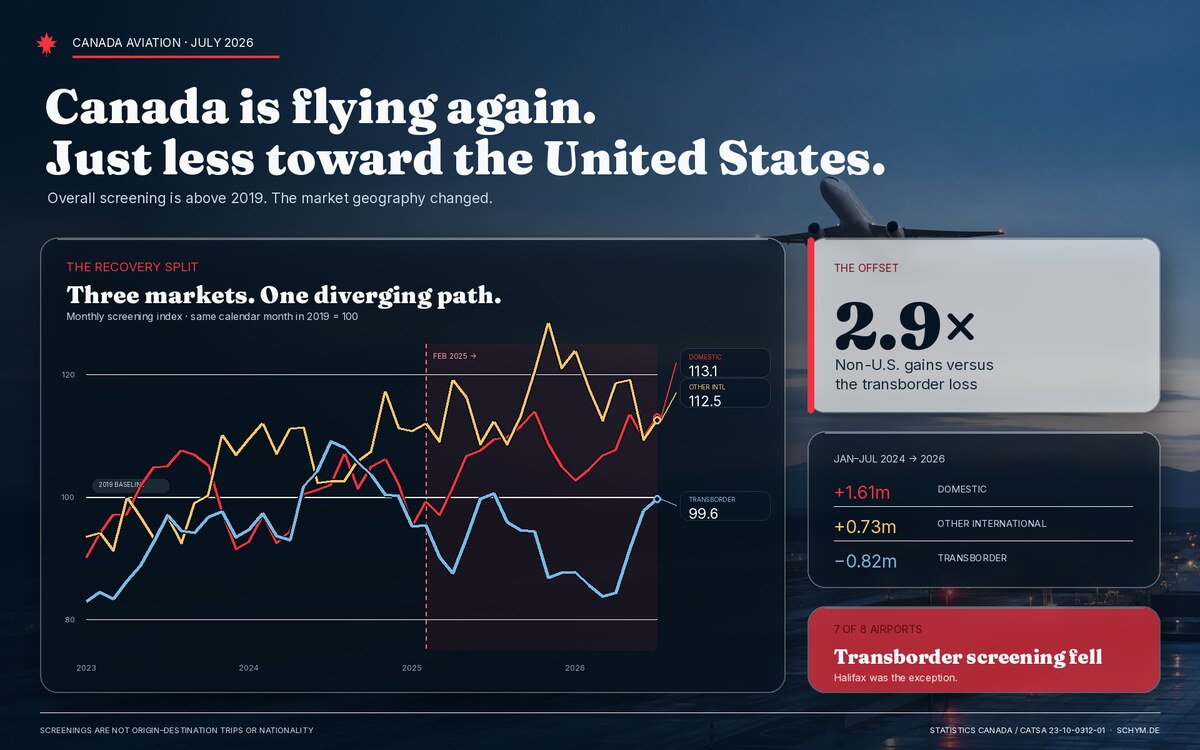

Canada Is Flying Again. Just Less Toward the United States.
Total Canadian airport screenings recovered above 2019, while U.S. transborder traffic fell behind domestic and non-U.S. international travel.
Current arguments, visual data stories, reproducible evidence audits, and peer-reviewed research.
Showing 36 publications

Total Canadian airport screenings recovered above 2019, while U.S. transborder traffic fell behind domestic and non-U.S. international travel.

Employment stocks remain resilient while the flows into and between jobs weaken across five labour markets.

EU commercial flight movements recovered to 98% of 2019. European hub connectivity recovered to 88%. Frankfurt shows why frequency, seats, passengers, and connectivity need separate measures.

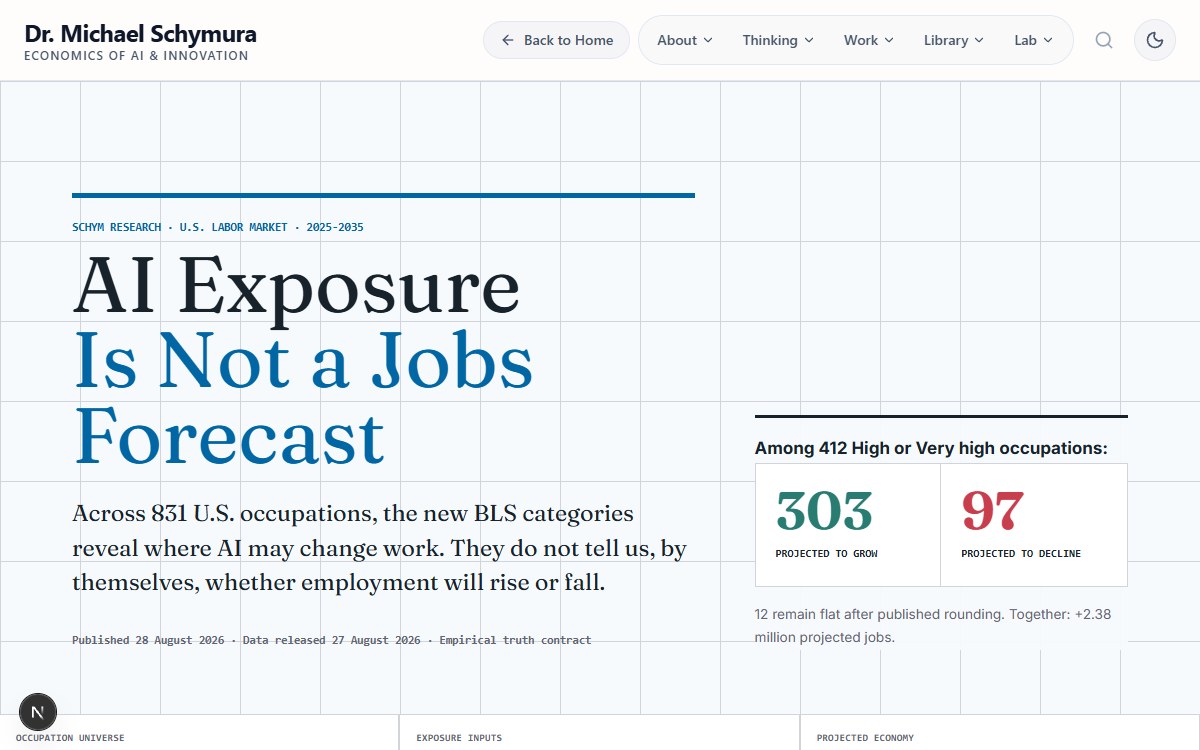
Across 831 U.S. occupations, relative AI exposure and projected labor demand resolve into different distributions.

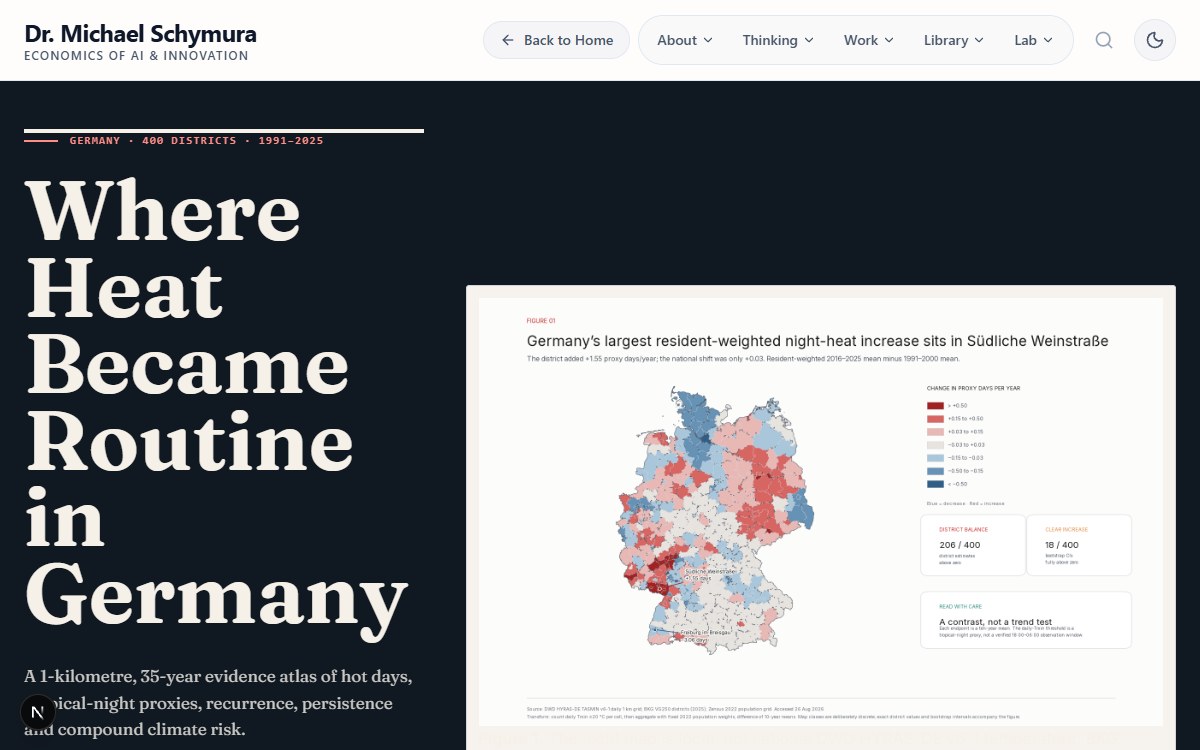
Across 400 districts and 35 years, extreme heat shifted from an occasional disruption into a recurring operating condition.

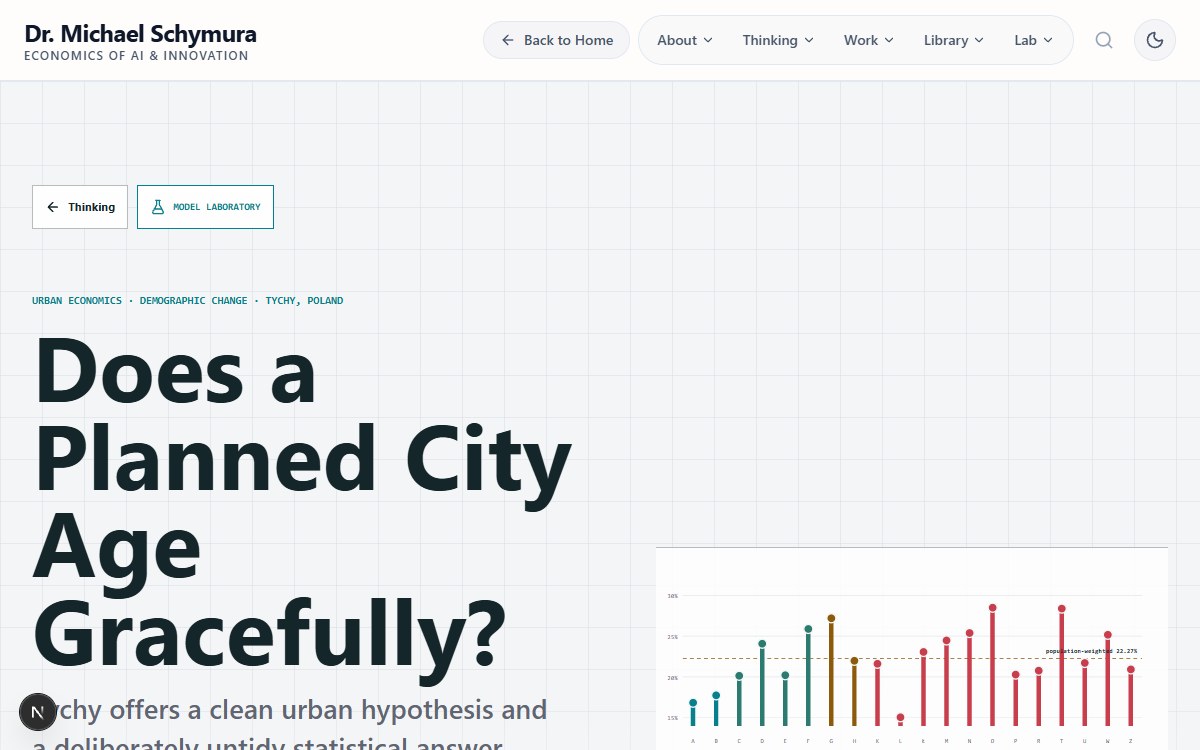
Tychy’s estates reveal visible age and access differences, but a twenty-estate model cannot turn planning chronology into a causal effect.

Three city averages yield one ranking. But 74.6% of population-weighted midday surface-temperature variation lay inside the cities.

The age gradient in heat-associated presentations is strong. The evidence for an emergency-department throughput shock is not.

Production, exports, and factory-gate value reveal three different geographies of Europe’s ice-cream economy.

Kaub’s low-water shock is visible; a national nine-sector panel does not recover a stable industrial-output penalty.

Total manufacturing orders rose 3.1%, but broad orders and realized turnover moved in the opposite direction.

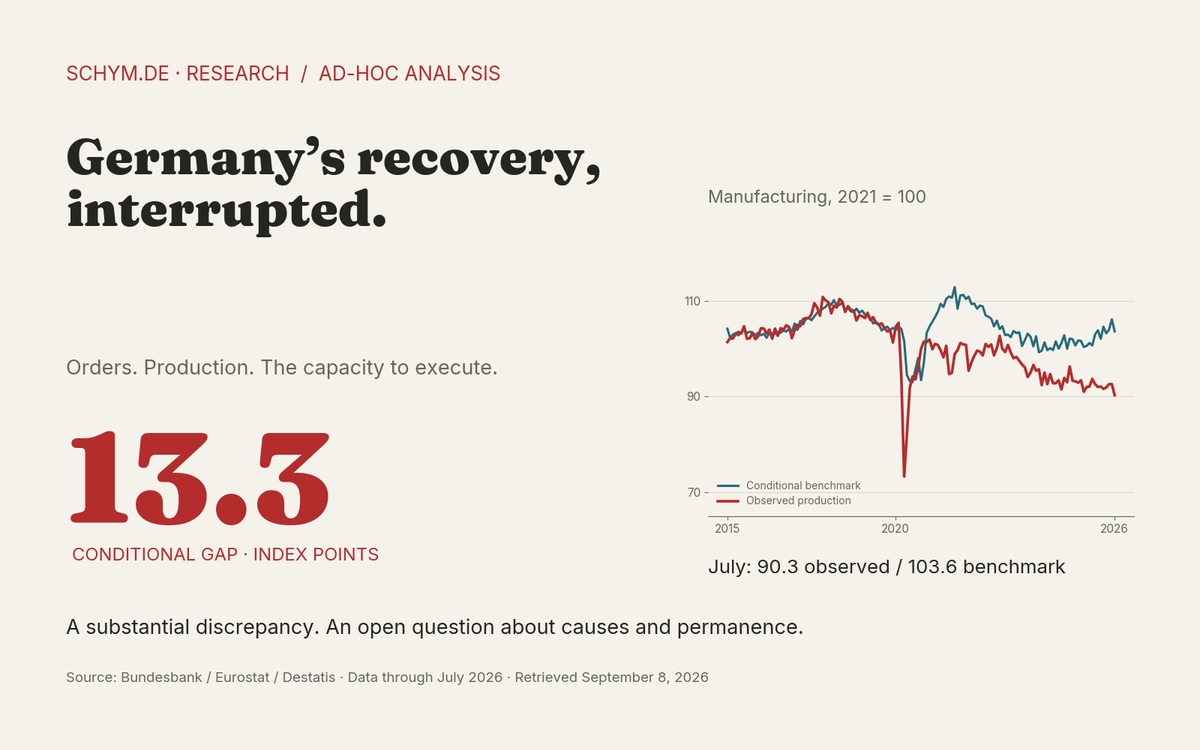
The June divergence between German manufacturing orders and production is real; a post-2021 structural break is not established.

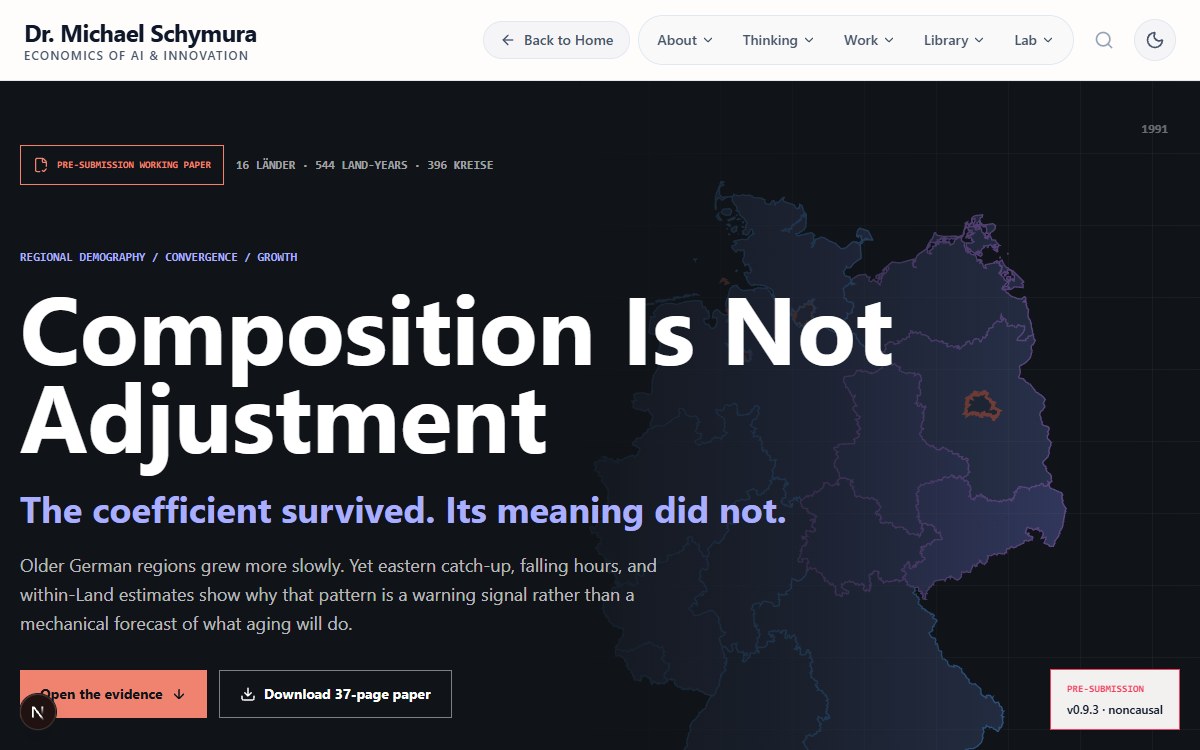
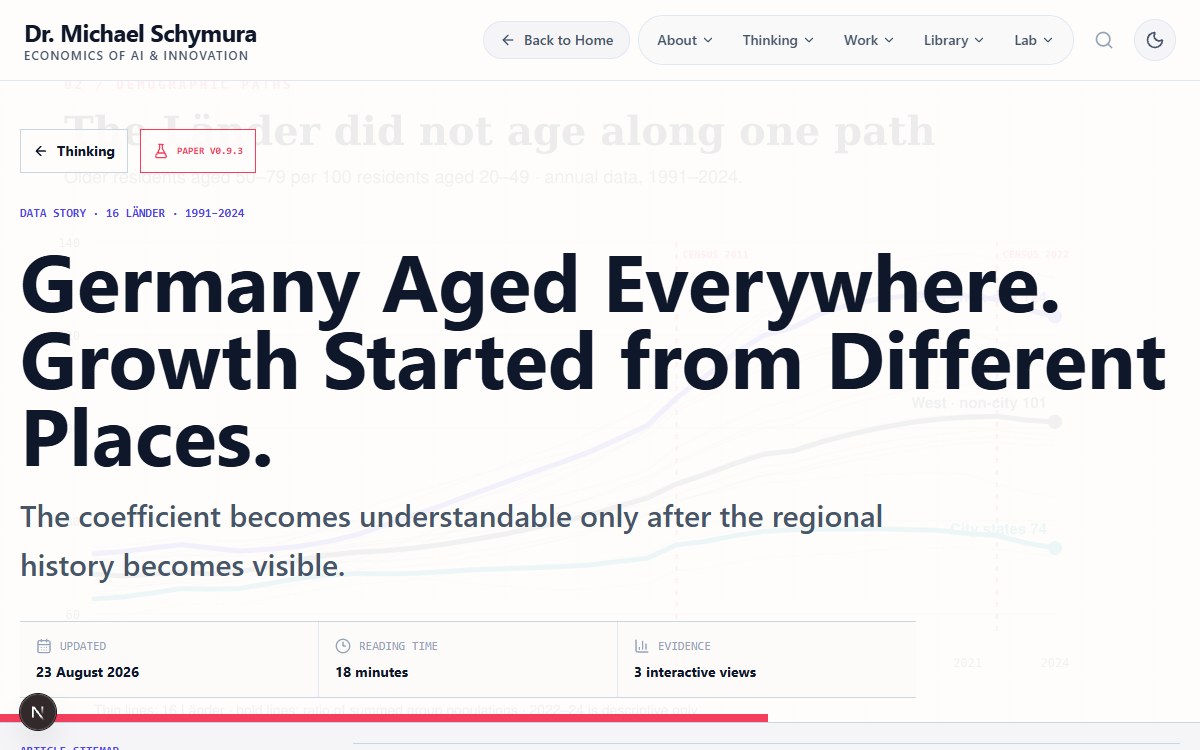
The coefficient survives. Its meaning changes once convergence, capacity, and within-Land adjustment become visible.

What Germany’s regional aging ratio does and does not reveal about growth, convergence, productivity, and automation.
German chemicals and energy-intensive industry since 2010: what the gas shock caused, what it cannot explain, and why persistence changes the policy test.

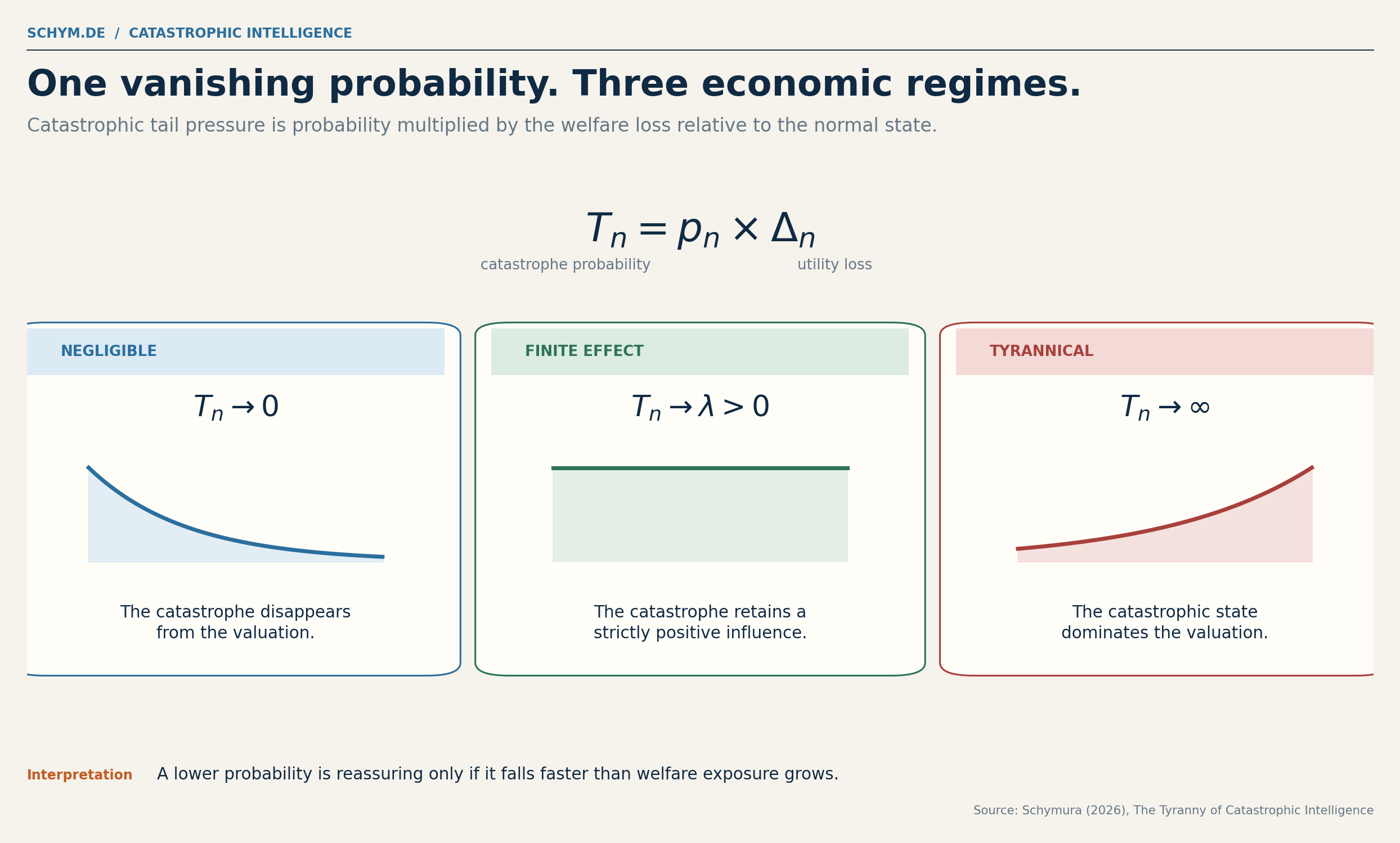
Component reliability does not determine systemic safety. This second-revision manuscript derives a systemic-failure rate from dependence architecture, then composes it with welfare exposure and model ambiguity.

Tail pressure, dependence architecture, and why a falling catastrophe probability is reassuring only when it falls faster than welfare exposure grows.

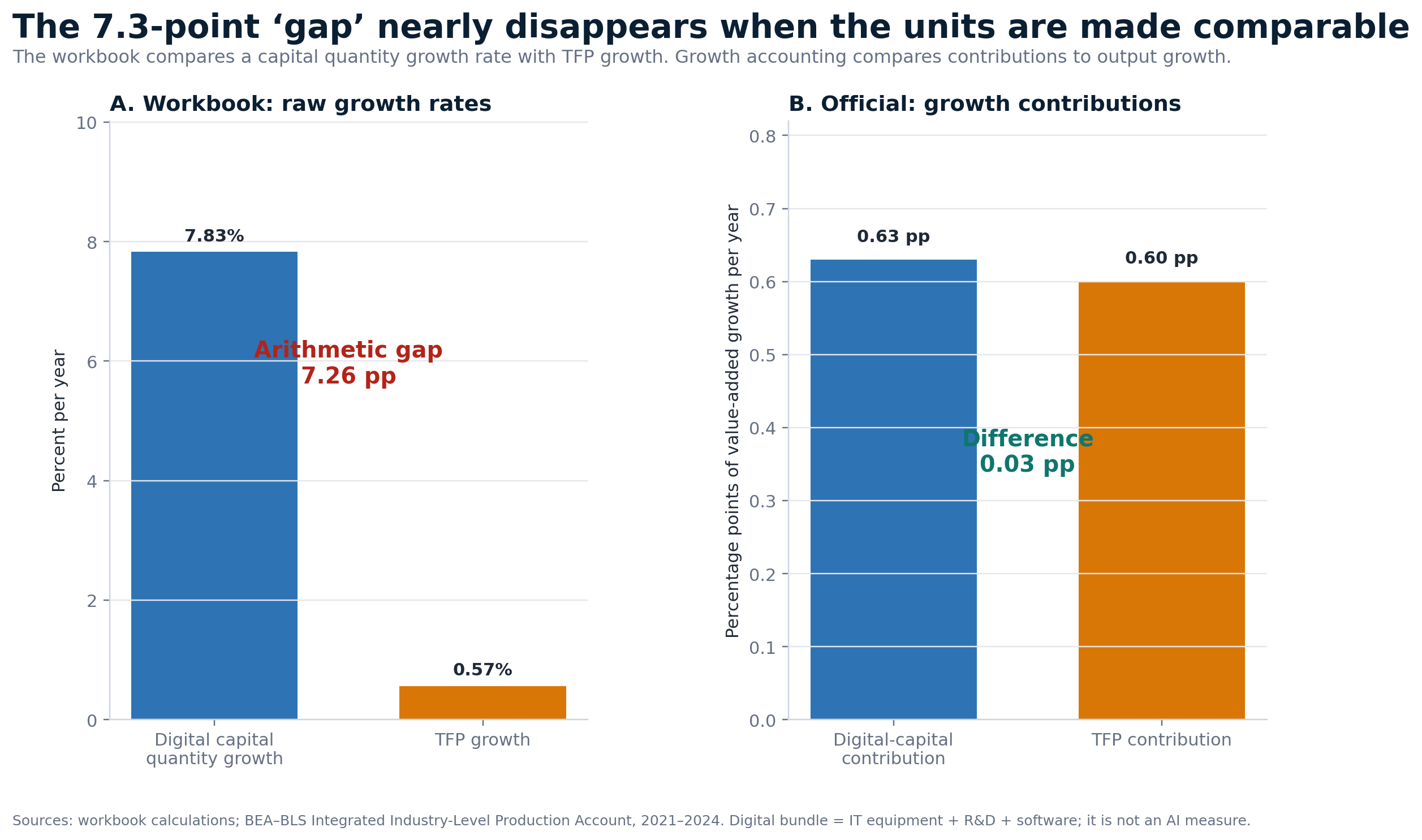
A forensic BEA–BLS evidence audit corrects the apparent AI productivity gap, opens 61 industries to inspection, and traces where capability disappears before it becomes durable output.

Paul Romer, artificial intelligence, and the economics of validated knowledge: why growth depends on proof, absorption, and diffusion rather than candidate volume.

What Solow gets right about AI: capital, machine services, weak links, energy, adoption, productivity measurement, and the investment race.
Liu et al.'s NBER paper uses 175 years of data to show how technology shaped labor markets—and why AI may reverse every historical trend from education premia to gender convergence.
What train records reveal about Operation Reinhard: reconstructing the hyperintense 'pulse' of late-summer 1942 through rate-centric genocide analysis.
A deep dive into Fügener et al.'s groundbreaking research on automation versus augmentation—and the emergence of a tripartite workforce taxonomy.
How artificial intelligence reshapes the hierarchies of tacit knowledge—and the normative trade-offs between efficiency and equity in the emerging knowledge economy.
A research digest from November 2025: Structural rigidities and the macroeconomic consequences of the 'missed decade' in climate policy.
Generative AI as a Determinant of Labor Market Dynamics. New empirical evidence reveals a 13% employment decline for early-career workers in AI-exposed fields.
A comprehensive synthesis of late 2025 research from NBER, IMF, and OECD revealing a 'Great Fracture' in labor markets and industrial organization.
Why standard economic models fail when facing low-probability, high-impact events like climate change. A proposal for a new risk-adjusted discount rate.
A deep dive into empirical substitution elasticities for climate policy modeling. How flexible is production really?
A canonical research essay on decomposing Europe’s energy-intensity decline into technological and structural effects.
How Germany's feed-in tariff shaped the spatial equilibrium of wind investment (1996–2010) — and why grid integration becomes the hidden constraint.
An empirical investigation into co-authorship patterns in environmental economics. How the 'lone wolf' model of research gave way to team science.
How international trade affects environmental outcomes through scale, composition, and technique effects—evidence from European manufacturing.
A rigorous ethical examination of intergenerational discounting—why market-rate arguments fall short, and how impossibility results reshape what 'fair' evaluation can mean on infinite horizons.
A comprehensive survey of how exogenous and endogenous technological change has been incorporated into climate-energy-economics models—and why these assumptions fundamentally shape policy recommendations.
Get new essays and research digests delivered to your inbox. No noise, just signal.