Book Oracle
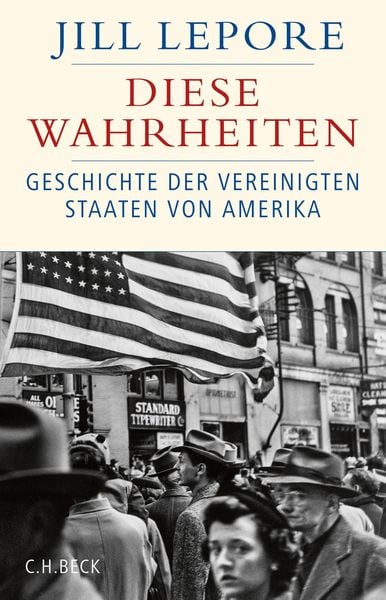
Diese Wahrheiten
Jill Lepore (2019) · 1232 pages
Jill Lepore tells the history of the United States as a continuous argument about truth, power, and democracy. Beginning with the founding myths and carrying through slavery, civil rights, media, technology, and political fracture, this is not a neutral chronicle but a deeply informed narrative that treats American history as a living, contested idea rather than a closed past.
Why read
Because it does what very few history books manage: it combines intellectual rigor with narrative force and moral clarity. Lepore shows how American ideals were formed, compromised, defended, and distorted, without simplifying or flattening the contradictions. It is demanding, comprehensive, and deeply clarifying.
Schym
Rating
This is, quite simply, the best book about the history of the United States that I have read. Not because it is the most exhaustive, though it nearly is, but because it understands American history as a moral and intellectual struggle that never resolved itself and never will.
Lepore writes with a rare combination of authority and restraint. The scholarship is immense, yet it never collapses into academic heaviness. Instead, the book moves with a calm, deliberate rhythm, tracing how ideas of truth, equality, and power were articulated and then repeatedly betrayed. Slavery, racism, democracy, technology, and media are not treated as separate chapters of progress or failure, but as interlocking forces that shape each other over centuries.
What makes the book exceptional is its refusal to mythologize. Lepore does not offer comfort, redemption arcs, or easy coherence. She insists on contradiction, on the persistence of unresolved conflicts, and on the responsibility of citizens to understand how narratives are constructed and weaponized. The United States emerges not as a finished project, but as an argument that keeps reopening itself.
Despite its size and density, the book never feels inert. Its power lies less in drama than in accumulation. Page by page, it sharpens your sense of how the present grew out of the past, and how fragile the promises of democracy have always been.
Verdict: five stars. A monumental, unsparing, and essential work of history. Best suited for readers who want to understand the United States not as a story of inevitable progress, but as a contested idea whose consequences are still unfolding.
historynonfictionpolitics