Book Oracle
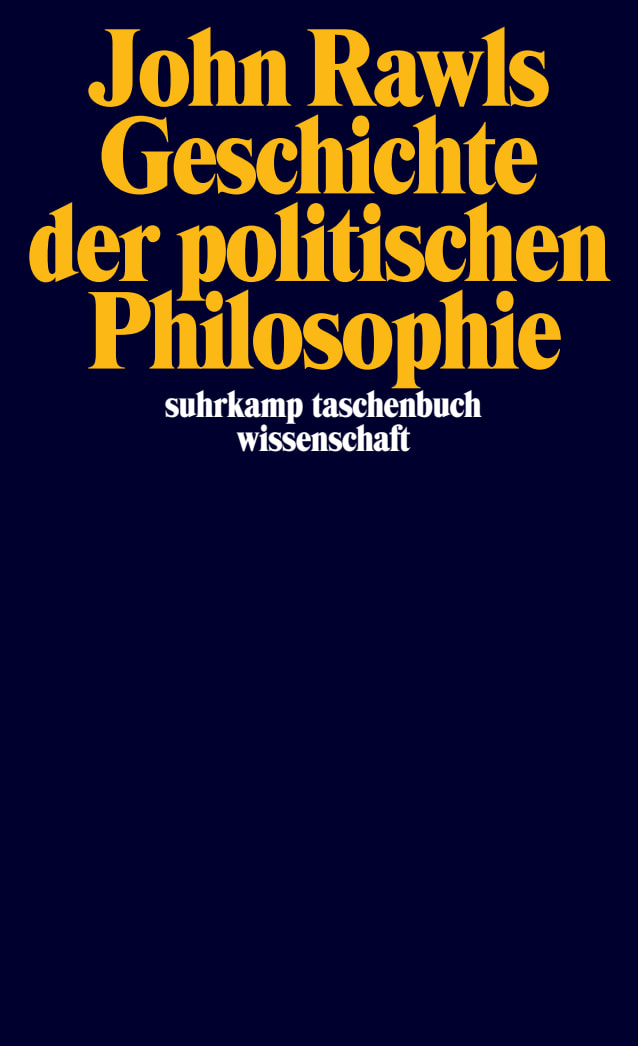
Geschichte der politischen Philosophie
John Rawls (2012) · 671 pages
These lectures show John Rawls reading the canon of modern political philosophy with the steady patience of someone who believes that arguments matter because lives do. Moving from contract theory to utilitarianism and on to Marx, Rawls clarifies what is at stake in legitimacy, freedom, and equality, and why the question of justice never stays abstract for long. It is less a survey than a guided reconstruction: a way of seeing Hobbes, Locke, Rousseau, Hume, Mill, and Marx through a mind that helped define contemporary debates about fairness.
Why read
Because it lets you watch a great theorist think in public. Rawls does not just summarize classics; he calibrates them against questions that still decide how we design institutions, justify authority, and protect those with the least power. If the veil of ignorance and the conviction that a society is only as decent as its treatment of the weakest have ever felt persuasive to you, this book deepens that persuasion by giving it ancestry, friction, and sharper contours.
Schym
Rating
Some books feel like monuments because they demand reverence. This one earns its authority differently: by showing how authority is built, contested, and sometimes deserved. Rawls is not writing here in the posture of a solitary system builder. He is teaching, which means he is explaining, comparing, and insisting on clarity as a moral discipline.
The pleasure of these lectures is their double focus. On the surface, you move through familiar names in modern political thought. Underneath, you keep encountering the same quiet question: what would count as a justification that the least advantaged could live with, not as a concession, but as a principle? Rawls never turns that question into a slogan. He works it into the grain of the tradition, so that contract theory stops being a historical curiosity and becomes a living test of legitimacy.
If you have ever carried around the idea of the veil of ignorance as a private measuring device for public arguments, this book gives that device a deeper calibration. Rawls reads predecessors with respect, but not with deference. He listens for what their frameworks can and cannot secure: stability without domination, freedom without cruelty, equality without flattening. That is where his influence becomes palpable. The thought that a society is only as attractive as the way it treats the weakest is not presented as sentiment. It is treated as a constraint on acceptable institutions, and therefore as a constraint on our self image.
The style is academic in the best sense: careful, unhurried, and resistant to cheap triumph. It is not a page turner, and it does not try to be. The reward is accumulation. Over time, you start to see political philosophy less as a museum of positions and more as a sequence of attempts to make coercion answerable to those who must endure it.
Verdict: five stars. A foundational companion to Rawls’s core ideas, and a rigorous way to re enter the classics without treating them as relics. Best for readers who want conceptual precision, who can tolerate slow argument, and who suspect that the most practical political question is still the oldest one: what do we owe each other, and what do we owe the least protected among us?
philosophypolitical philosophylecturesjustice