Book Oracle
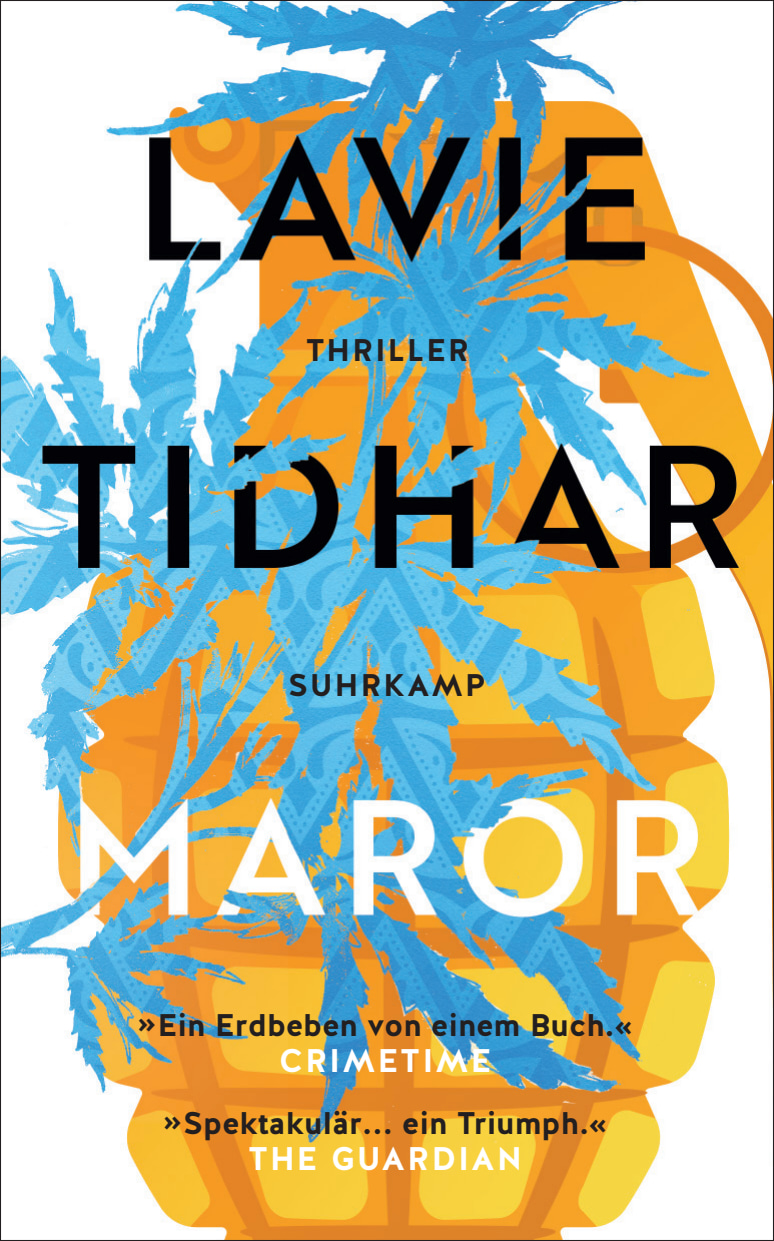
Maror
Lavie Tidhar (2024) · 639 pages
Lavie Tidhar’s Maror turns the making of modern Israel into a noir-inflected thriller, moving through decades of violence, institutions, and underworld economies without pretending any of it can be reduced to a single moral lesson. It is suspenseful in the granular way, powered by deals, loyalties, and betrayals, while the political context is not a backdrop but the engine. The result is a large, restless crime epic that insists on complexity and refuses easy verdicts.
Why read
Because it delivers real thriller momentum while treating history and politics as lived, compromised reality. Maror is for readers who can tolerate moral ambiguity and still want narrative drive, who prefer questions to fingerpointing, and who enjoy a book that keeps tightening the screws even as it widens the frame.
Schym
Rating
There are thrillers that borrow politics for atmosphere, and then there are books like Maror, where politics is the oxygen and also the smoke. Tidhar writes as if the nation itself were a crime scene, not in the sense of a simple accusation, but in the sense that every clean story becomes suspicious once you look closely enough. The book’s intelligence is structural. It does not argue a thesis so much as it stages an ecosystem in which power circulates, mutates, and protects itself.
What I appreciated most is the refusal to moralize. The novel is saturated with conflict, with competing necessities, with the kind of dual morality that is not hypocrisy but a social operating system. People speak one language for ideals and another for survival, and the gap between them is where the suspense lives. That is the real tension here, more than any single plot mechanism: the sense that the same act can be framed as protection or predation depending on where you stand, and that history keeps producing situations where those frames collide.
Despite the breadth, the reading experience stays muscular. Tidhar knows how to build forward pressure, scene by scene, even when the frame keeps widening to include new actors, new geographies, new entanglements. Suspense and politics are not competing genres here. They are the same instrument, played in different registers. You turn pages because something is always about to be traded, exposed, or detonated, and you keep reading because the consequences ripple outward into a larger moral weather.
The tone is dark, but not helpless. The book’s bleakness feels earned, the product of accumulated compromises rather than a pose. It offers what I would call a hundred shades of grey, not as a fashionable shrug, but as a hard-won realism about states, institutions, and the people who serve them. If there is a quiet ethic in the background, it is simply this: that simplification is a luxury, and sometimes a lie.
I finished Maror with that specific kind of satisfaction a good political thriller can create: entertained, unsettled, and slightly more cautious about the stories we tell ourselves. It also did what the best authors do, which is to make me curious about what they will do next. I am genuinely keen to see where Tidhar goes in the new one, and whether he can sharpen this same mixture of narrative propulsion and moral complexity into a different shape.
Verdict: four stars. A big, uncompromising thriller that treats Israel’s modern history as a field of forces rather than a courtroom. Best for readers who want suspense with political weight, and who do not need a book to take sides in order to take it seriously.
thrillercrimepolitical fictionIsraelhistory