Book Oracle
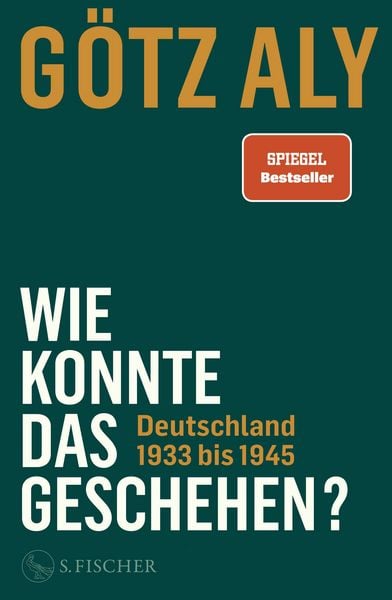
Wie konnte das geschehen?
Götz Aly (2025) · 760 pages
In this large, unsparing investigation of Germany from 1933 to 1945, Götz Aly traces how Nazi rule turned ordinary social ambitions into political complicity. He follows the regime’s craft of seduction and coercion, showing how promises of status, belonging, and material security could harden into participation, silence, and moral numbness, and why some of these mechanisms still feel disturbingly familiar.
Why read
Read this if you want a granular answer to the most unsettling question: not how terror worked in theory, but how it became livable, even attractive, to millions. Aly is at his best when he shows politics as a system of incentives, emotions, and self-deceptions, and when he makes the present feel less innocent by comparison.
Schym
Rating
There are books about the Nazi period that inform you. And then there are books that quietly rearrange the furniture in your head, not by shock effects, but by forcing you to sit with mechanisms you would prefer to keep abstract. Wie konnte das geschehen? belongs to the second category. It is less a chronicle than a dissection of attraction: of why a murderous regime could feel, to many, like an offer.
Aly’s most unsettling strength is his refusal to treat complicity as an exotic moral pathology. He keeps returning to the banal forces that make history move: the hunger for status, the craving for belonging, the relief of having someone else name your enemies, the small rewards that make you tolerate the large crimes. What emerges is not a single explanation but a repertoire of political techniques, a whole grammar of seduction and pressure that turns citizens into participants, and participants into people who no longer notice what they have become.
The book is also sharp about time, about the way a regime accelerates life until reflection feels like a luxury. Once you are constantly mobilized, constantly reassured and threatened, you do not need to be convinced in a philosophical sense. You only need to be kept busy enough to cooperate, and scared enough to call it prudence. Aly writes with the bleak clarity of someone who believes that moral collapse is rarely sudden. It is cumulative, practical, and often rewarded.
What stayed with me most is the recognition that the leadership did not stumble innocently into catastrophe. The project was knowingly destructive, economically and morally, yet it demanded continuation because stopping would have meant reckoning. That logic, the self-entrapment of power, is one of the book’s most eye-opening lines of force. It makes the war not just an outcome, but a necessity for a system that could no longer afford truth.
This is not an easy read, and it does not try to be. The density is part of its ethic: you are not meant to glide. Still, the experience can feel strangely compelling, because the analysis keeps touching the nerve that matters. The nastiness is not only in what happened, but in how catchy it could sound at the time, and how some rhetorical and social reflexes echo into the present.
Verdict: five stars. A demanding, essential book for readers who want understanding without comforting distance, and who can tolerate the discomfort of seeing political evil not as an exception to society, but as something society can be taught to enjoy.